

Backed by a vast, diverse fanbase, F1 provides an unparalleled platform for brands to present their products in a dynamic, high-stakes environment. Seeing sponsors names emblazoned on grandstands, billboards, merchandise and the cars themselves is synonymous with the sport, with notable expansion into virtual and social media platforms in recent years. Figures from Ampere Analysis, published the same week Kimi Antonelli was confirmed World Champion, calculated that total global Formula 1 sponsorship spend will exceed $3 billion for the first time, in 2026. This equates to an annual growth rate in sponsorship contributions of around 15%. But how do these partnerships work, what do both sides get out of the deal and just how effective is F1 sponsorship for a brand?

Multi-level Sponsorship format
F1 Championship Partners
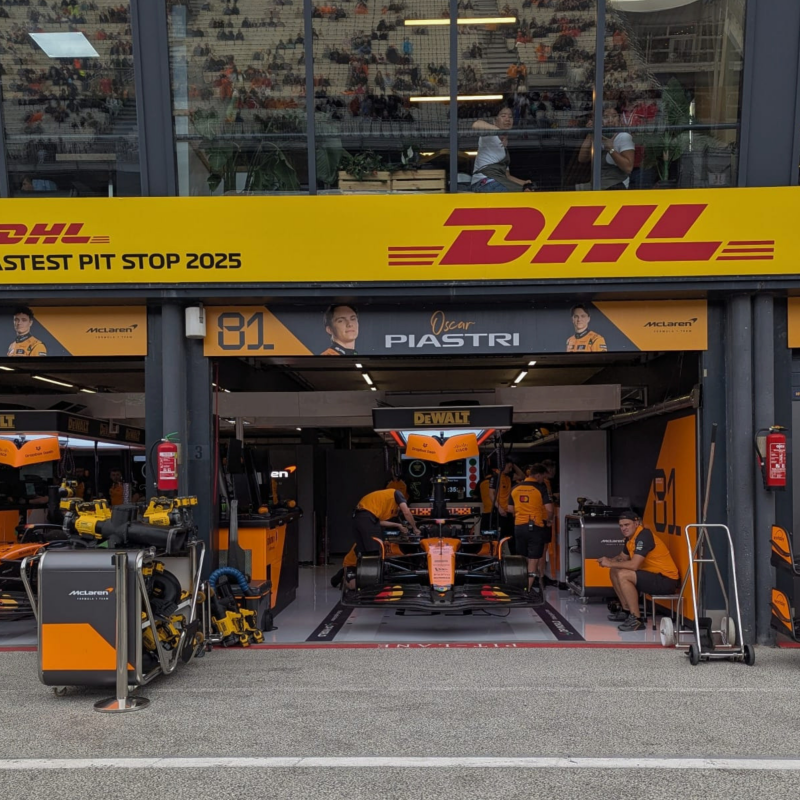
F1 currently has more than 30 championship-level partners, split across 4 tiers, from highest to lowest: Global partners, Official partners, Regional partners and Official providers. The tier distinguishes how prominent and wide-reaching a brand’s presence is (and also relates to the amount of investment made). Teaming up with Formula 1 management to display their names throughout the season, Global partners are high-level brands paying massive fees for a universal presence. Most individual financial details for this are confidential and not publicly disclosed by F1 or the brands. However, industry reports, financial analysis, and media estimates provide insight into what some of the top-tier global partnerships are worth, with those of Aramco, DHL and Heineken estimated to each be between $42M and $60M per year.
| F1 2026 global partner | Category | Start partnership |
|---|---|---|
| Aramco | Enery/chemicals | 2020 |
| DHL | Logistics/freight | 2004 |
| Heineken | Beer | 2016 |
| Lenovo | Technology | 2025 (previous official partner since 2022) |
| AWS | Cloud/AI/24 F1 Insights | 2022 (previous official partner since 2018) |
| LVMH | Luxury | 2025 |
| MSC cruises | Travel | 2022 |
| Pirelli | Tyres | 2011 |
| Qatar Airways | Airline | 2023 |
| Sales Force | Software |



Technology and finance now lead F1's sponsorship landscape, reflecting the sport's evolution into global data and business platforms. While energy giants like Aramco still occupy top-tier slots, they no longer dictate the grid the way traditional fuel and tyre brands once did. In the last year, 8 separate AI companies have formed new F1 partnerships (including Meta AI and Googles’ Gemini), demonstrating that sponsorship has expanded beyond physical logo
placements and now is more deeply rooted in cloud infrastructure, AI, engineering support, and data integration. More recently, food and luxury brands have gained prominent positions. The addition of LMVH in 2025 brought the now familiar sights of Tag Heuer, Louis Vuitton and Moet into the F1 spotlight.

Team Partners & Sponsors
Individual F1 teams sign their own commercial partners independent of F1, running their own sponsorship programmes. A title sponsor buys naming rights to the team, such as Oracle with Red Bull or Mastercard with McClaren. Below that sit principal and official partners, technical suppliers, and smaller trackside backers. The same brand can appear at both F1 and team level, as Aramco does with F1 and with Aston Martin. The main categories in team sponsorship are:
- Title Sponsors: These are the team’s biggest financial backers, whose name often
merges with the team's official title (e.g., Oracle’s multi-million-dollar deal with Red Bull Racing).
- Technical & B2B Partners: These companies provide behind-the-scenes technology
including software, cloud computing, and engineering data in exchange for high
visibility (e.g. HP for computing).
- Luxury & Lifestyle Brands: A major modern shift has brought fashion houses and
consumer brands like TAG Heuer on track, helping teams tap into a growing global
audience.

The Role of the Sponsor
What are the main expectations of the sponsor and vice versa? Firstly, to provide financial and operational support. Sponsors inject millions into teams, acting as the main financial backbone. Major global partners can contribute tens to hundreds of millions annually (e.g., Oracle with Red Bull or Petronas with Mercedes).
Modern F1 sponsors also act to integrate services and technology, supplying real world infrastructure. For example, tech and cloud partners (e.g. AWS, Lenovo), can provide AI services, data analytics and computer hardware used to run real-time race simulations. Logistics partners (namely DHL), manage the complex global movement of the whole race team, from cars to hospitality structures, throughout the whole season.
So, as well as financial input, sponsors can provide crucial services to teams, ranging from robust cybersecurity, to fuel and oils used in the cars on track.
The advantages for the sponsors? Global brand exposure. Sponsors have a prime spotlight cast on them through TV broadcasts and digital platforms, spanning over 180 territories.Companies can gain huge credibility by attaching themselves to some of the most successful teams on track.
F1 paddocks and Grand Prix weekends serve as high-status business networking events for businesses and companies. Sponsors use Paddock Club access and corporate hospitality to host clients, build high-level corporate relationships and close deals through B2B (businessbusiness) networking.
Co-marketing events between sponsors are sometimes employed to ‘activate’ or launch joint consumer campaigns. Often these are targeted at F1’s younger, global audience and come in the form of limited-edition retail products, interactive digital or social media events (e.g. fan sweepstakes or online gaming competitions).
So, is Branding and Sponsorship really worth the financial investment?
Sponsorship now makes up over a fifth of F1's primary revenue for the first time, under Liberty Media. In short, without sponsors the future of F1 would be extremely short-lived. But does all the financial investment pay off for the investors themselves? Sponsorship can range from $500,000 for smaller deals, anywhere up to dizzying amounts of $100M for major title sponsorships. While some may think this a phenomenal amount of money for logo placement, it is actually much more than this. The importance is in brand activation. Through global exposure, business networking opportunities, client access and premium brand association, sponsors gain what they are really paying for. In addition, the positive connotations associated with the sport itself; speed, precision, teamwork and the drive to succeed attach themselves to the companies themselves. As long as your company can convert attention and exposure into influence and outcomes, F1 sponsorship could be your ticket to global success.
